Some AI experiments leave an application behind. Others leave images. This collection includes eleven AI-generated travel posters for Canadian cities, alongside a separate exploration of generated characters.
The posters use a consistent visual idea: a large city name above a detailed street scene, with pedestrians, bicycles, cafés, signs and a skyline. Ten use red line art on white; the Québec City poster uses blue.
Canadian city poster gallery
The images below are the original poster files, presented without retouching. Select a poster to open the full-size image. These are generated illustrations, with stylized combinations of city cues rather than documentary views of exact streets.
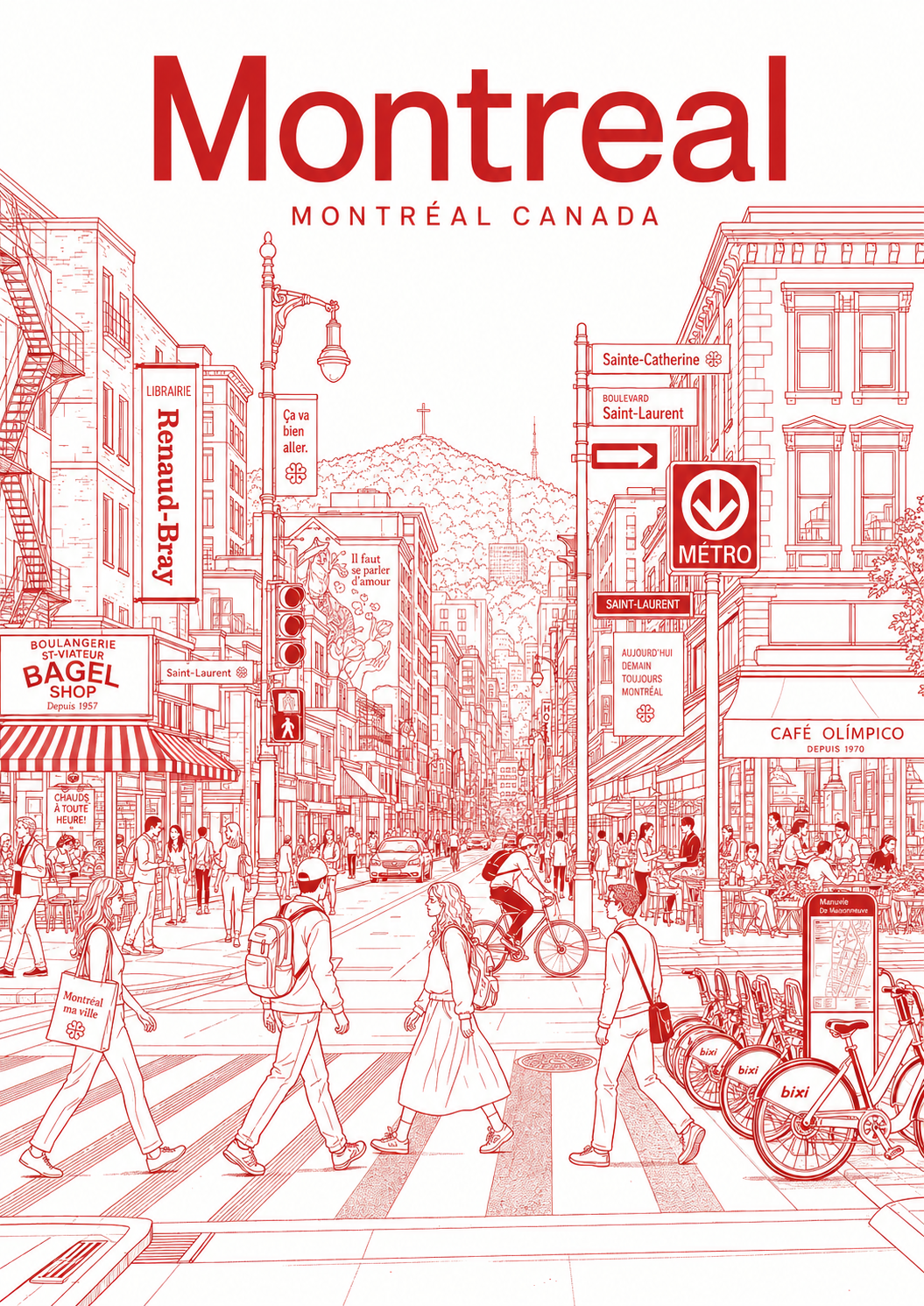 Montréal — red line art with a busy street, cyclists, cafés and French-language signs.
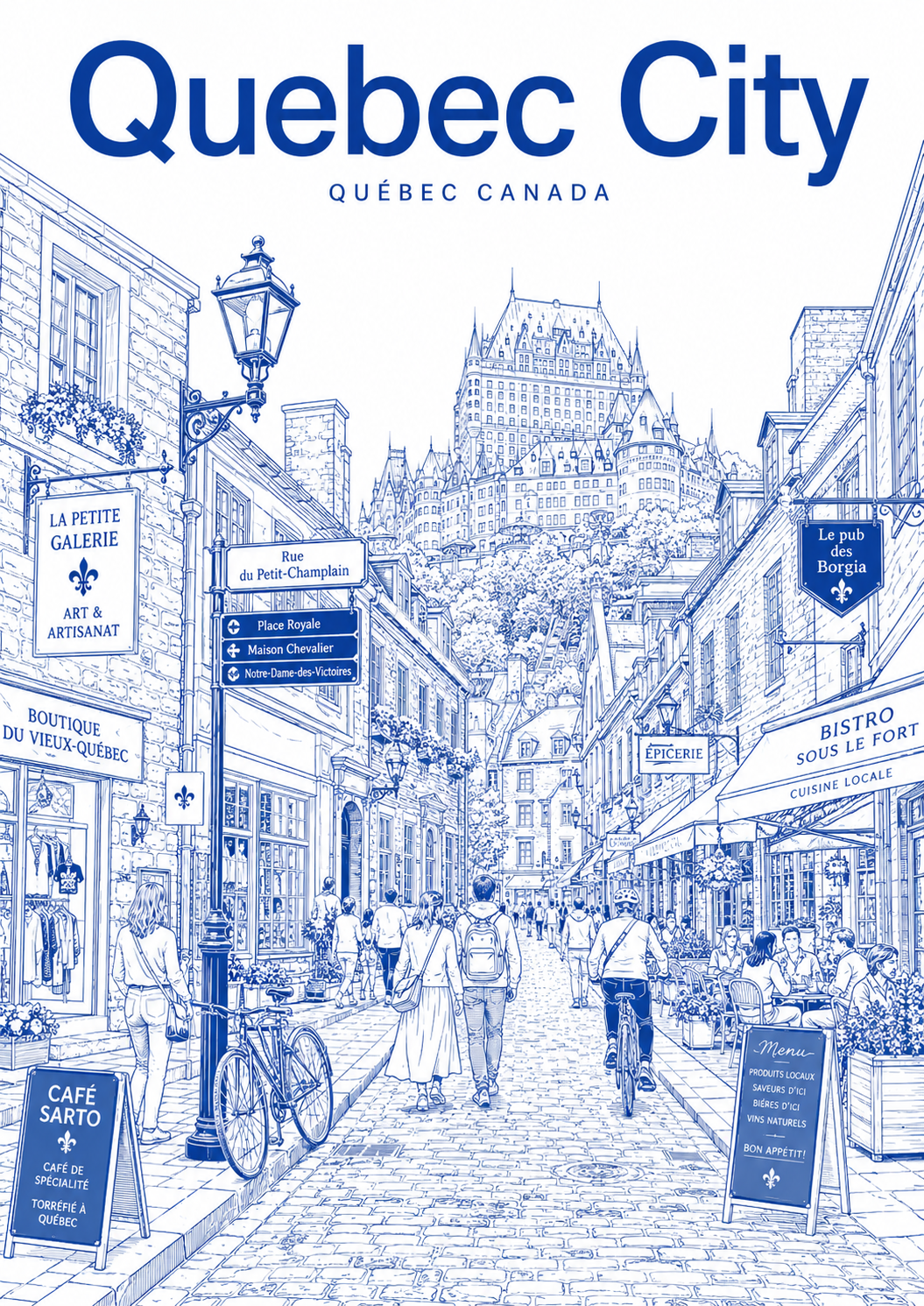 Québec City — the blue-and-white variation, with a cobbled street and château-like skyline.
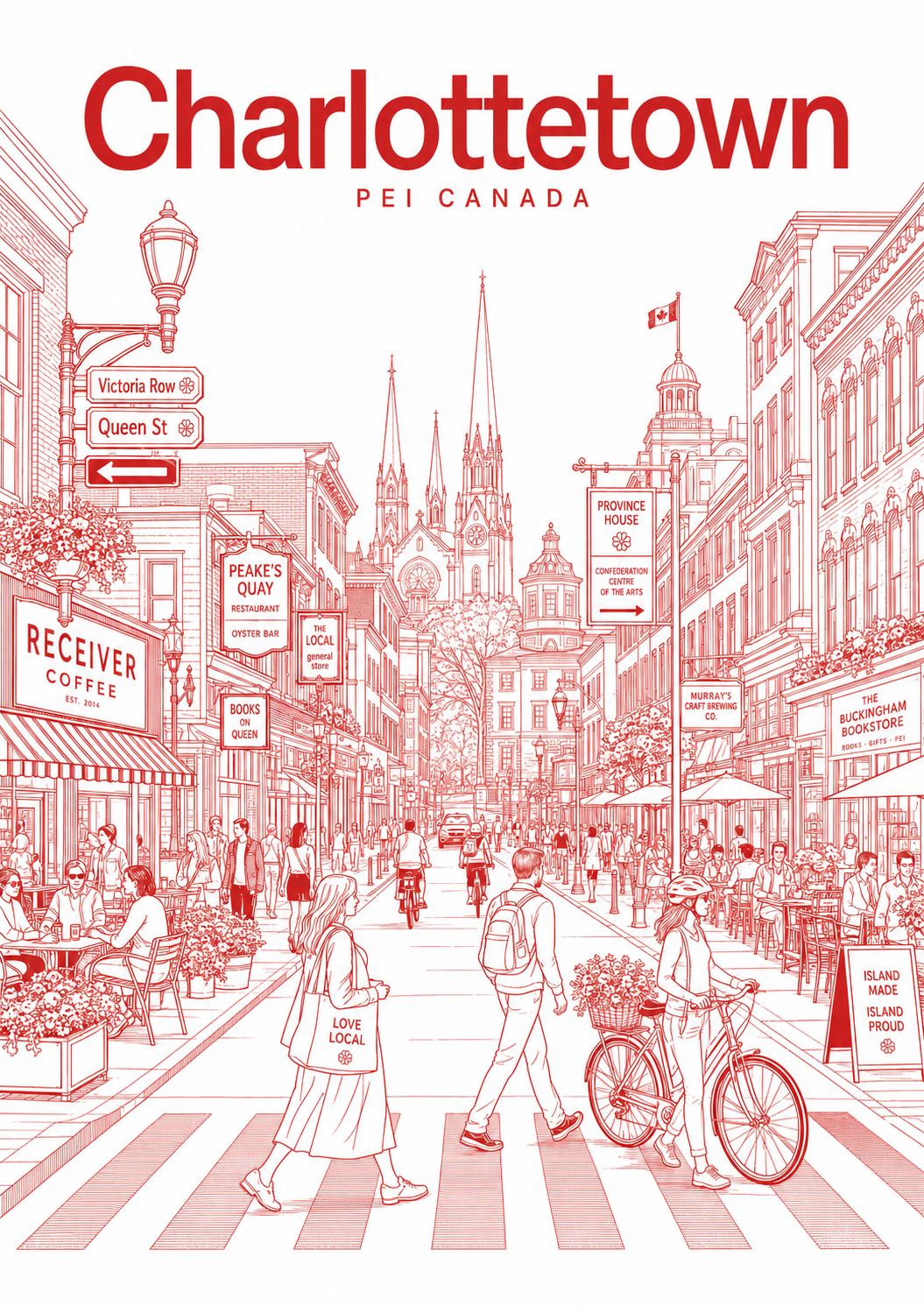 Charlottetown — a crosswalk and outdoor cafés beneath church spires.
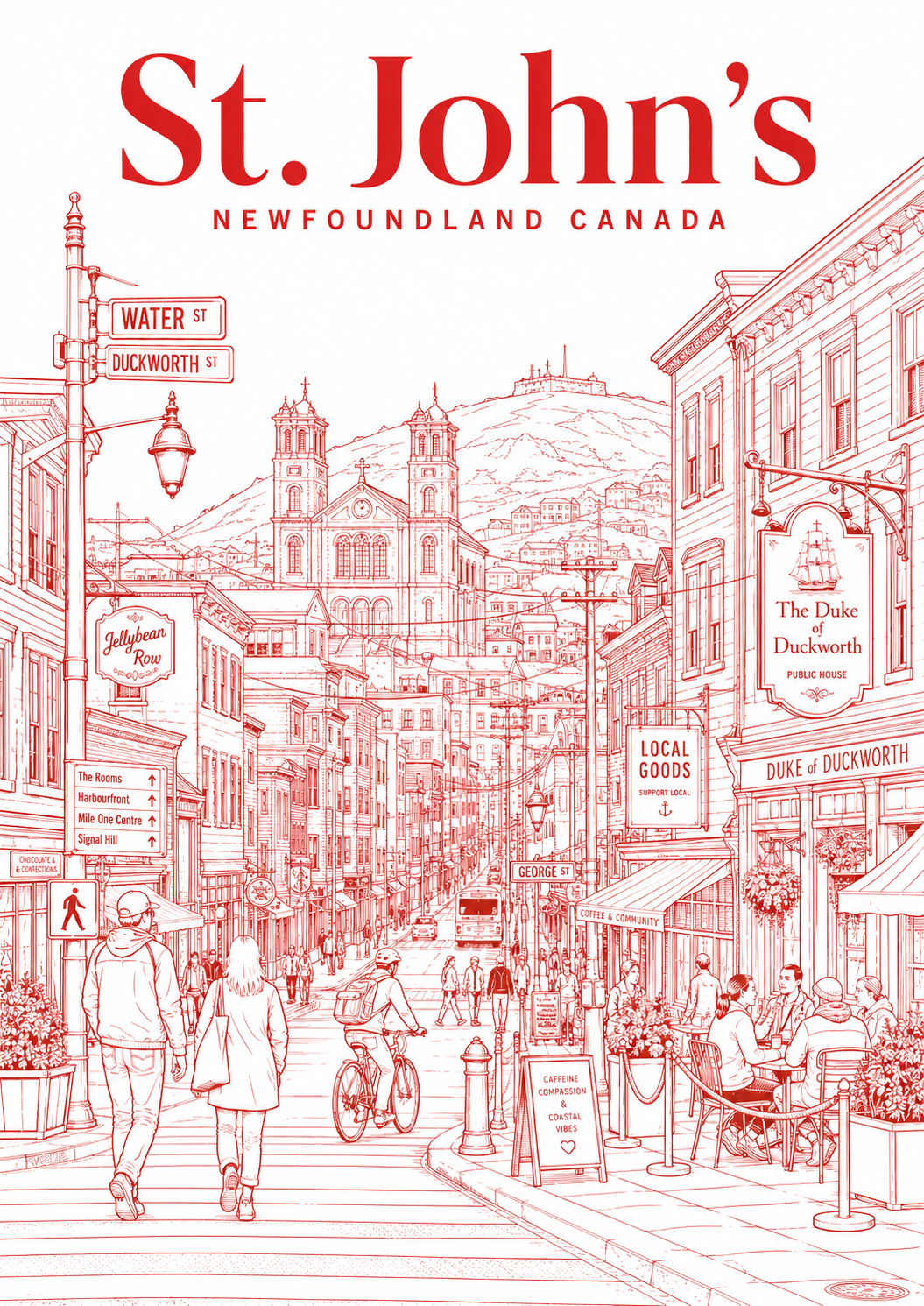 St. John’s — a sloping street and café scene against a hillside backdrop.
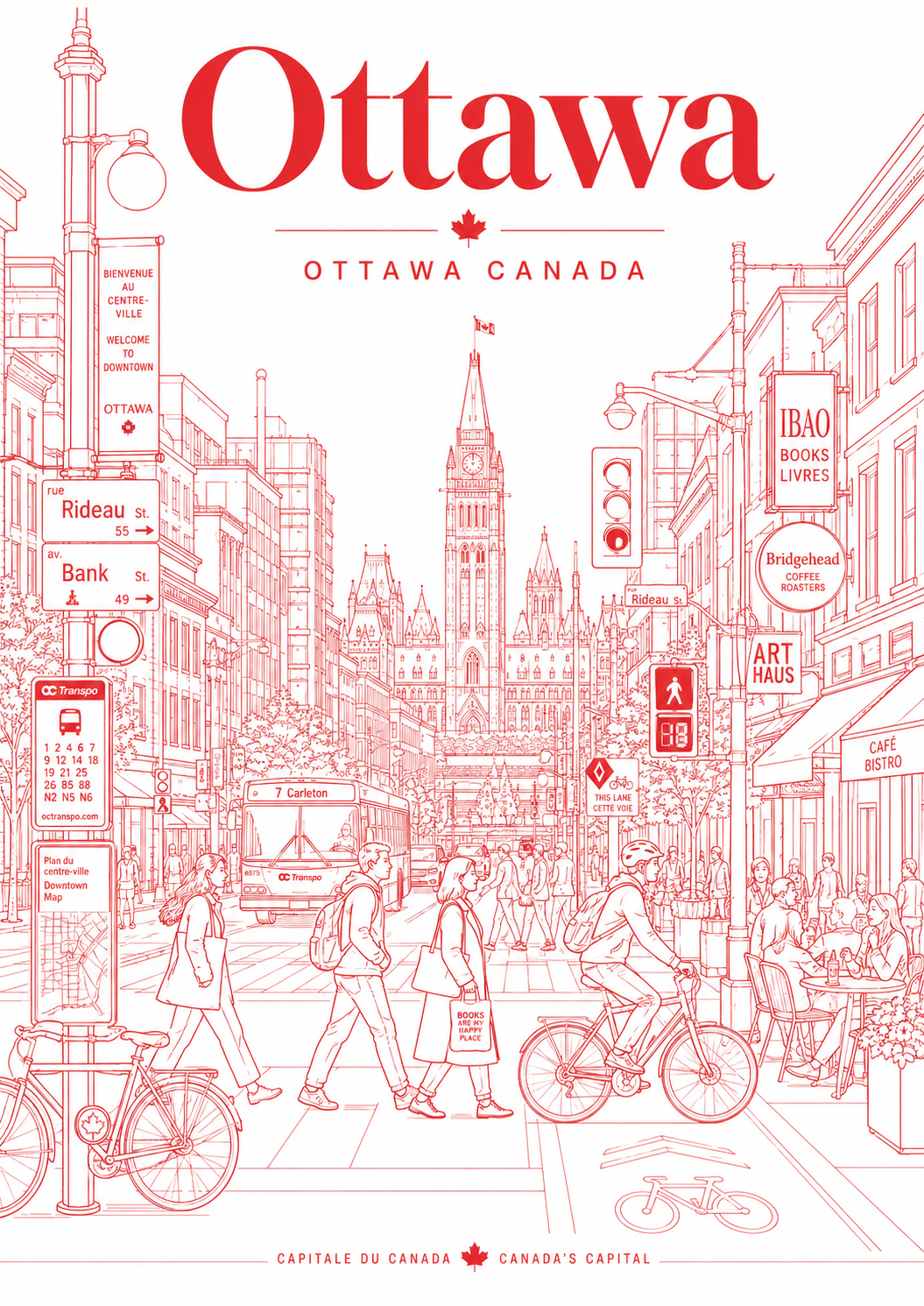 Ottawa — pedestrians and transit framed by a central clock-tower skyline.
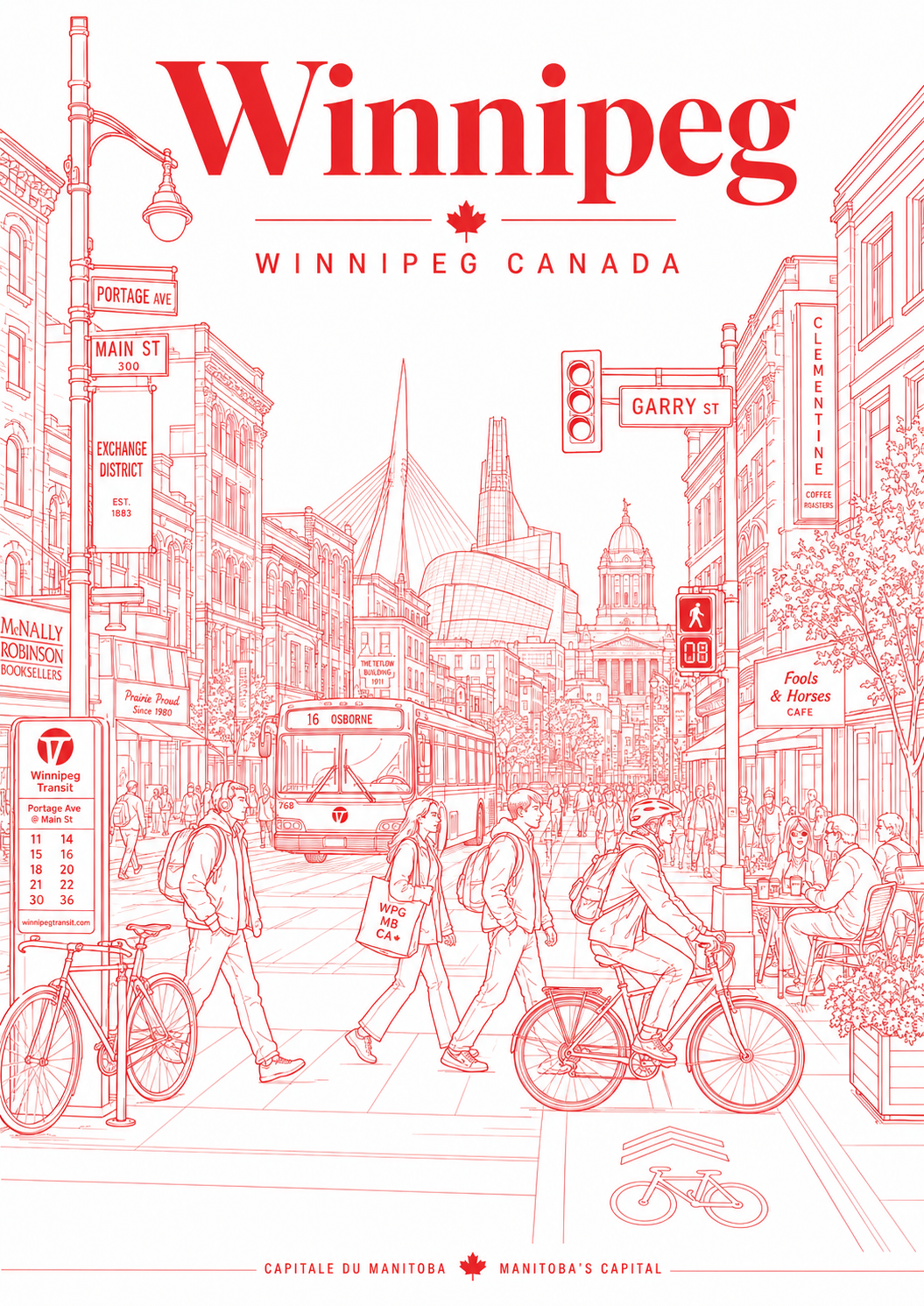 Winnipeg — a street scene combining transit, cyclists, a bridge and angular landmark forms.
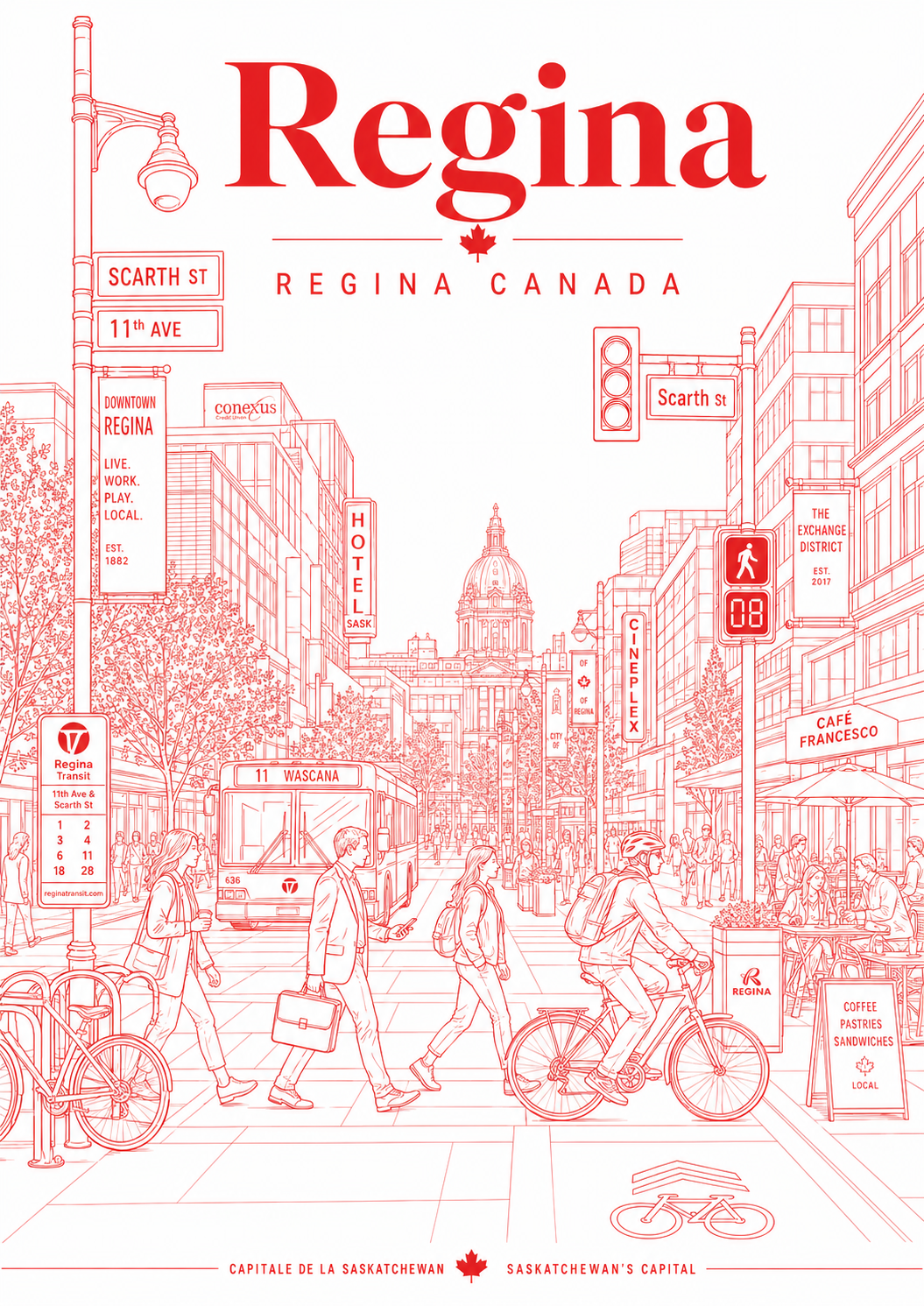 Regina — a downtown intersection with transit and a domed landmark in the distance.
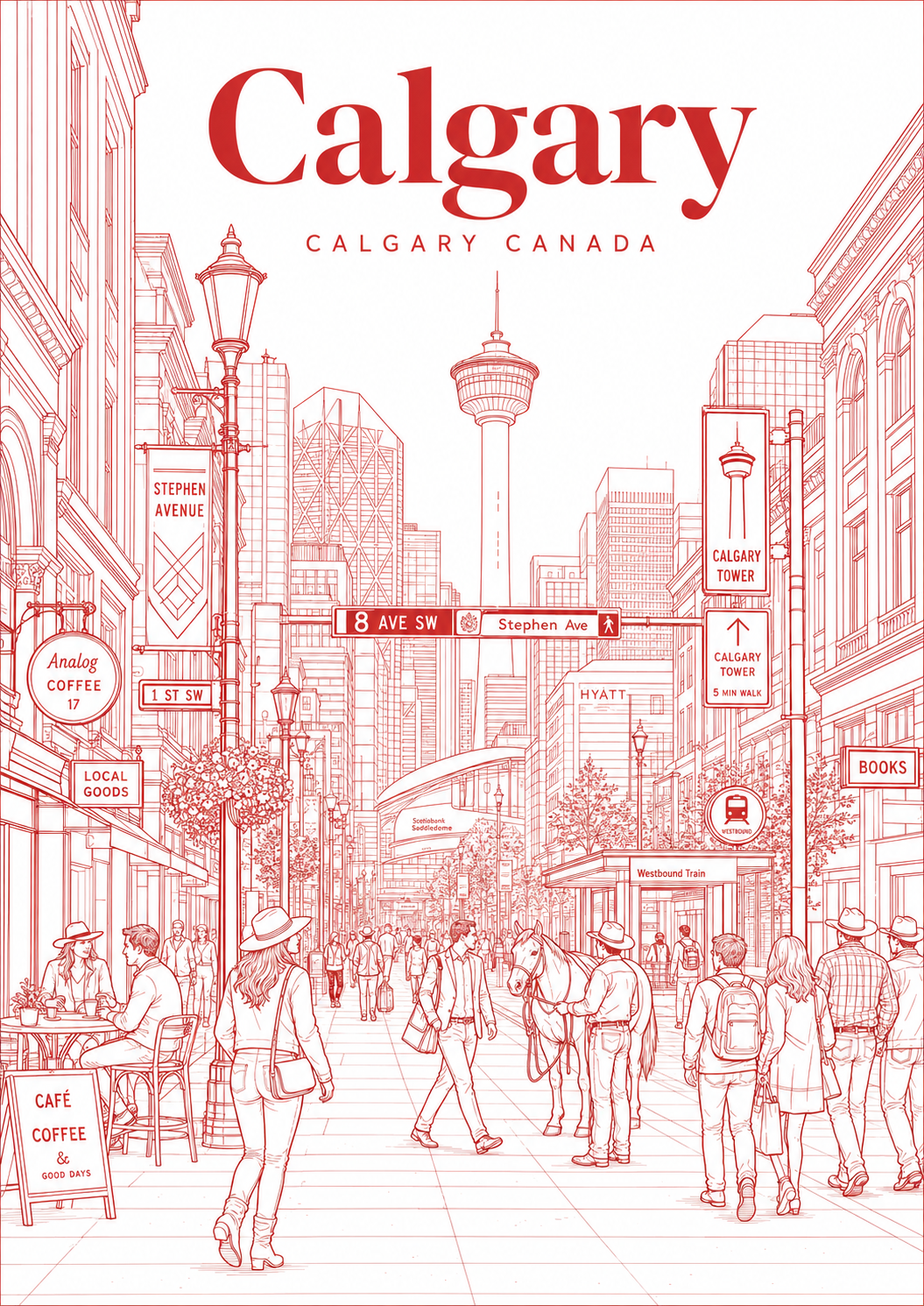 Calgary — cowboy hats, pedestrians and a tower above the street.
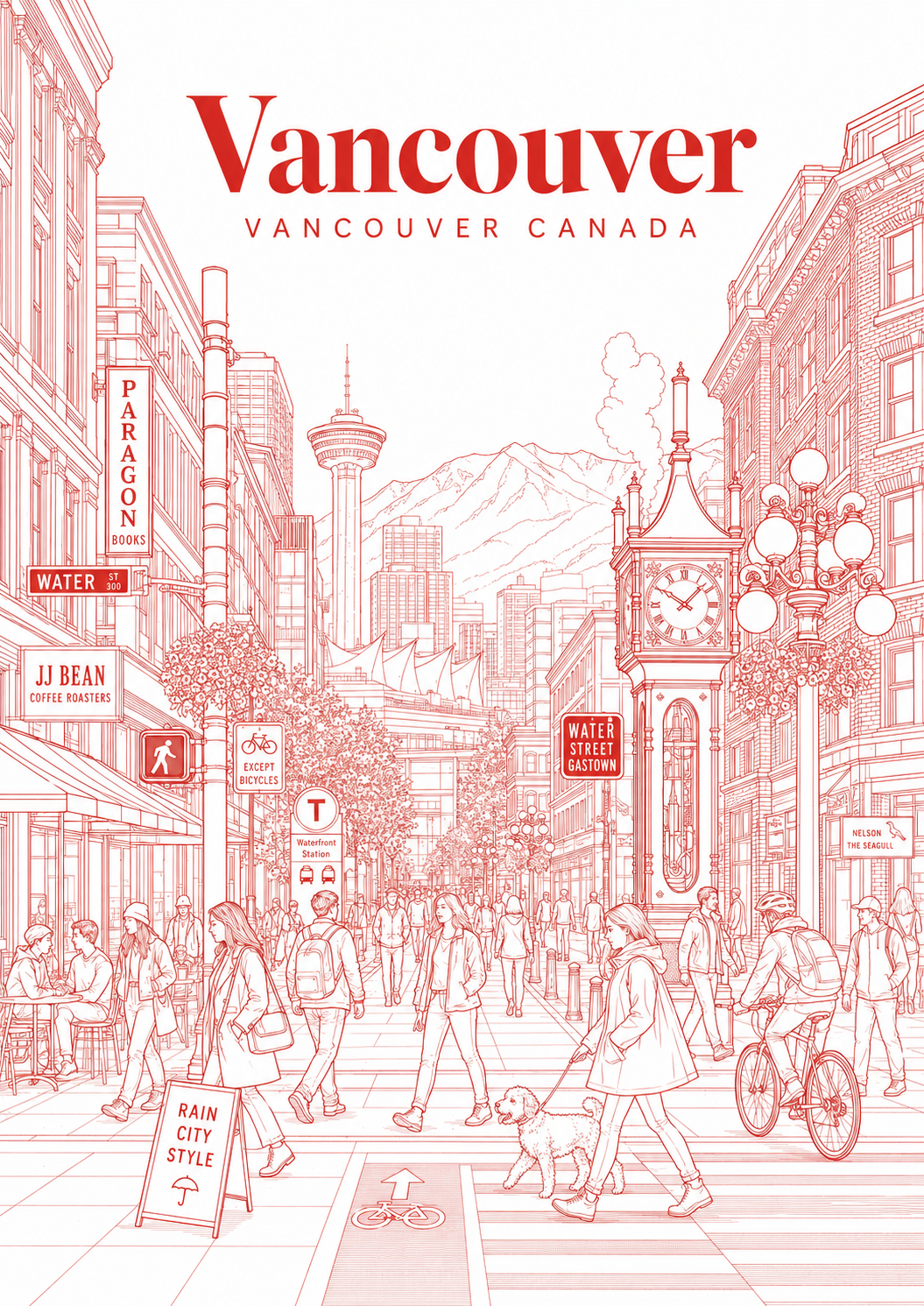 Vancouver — a street-clock scene with pedestrians and a mountain backdrop.
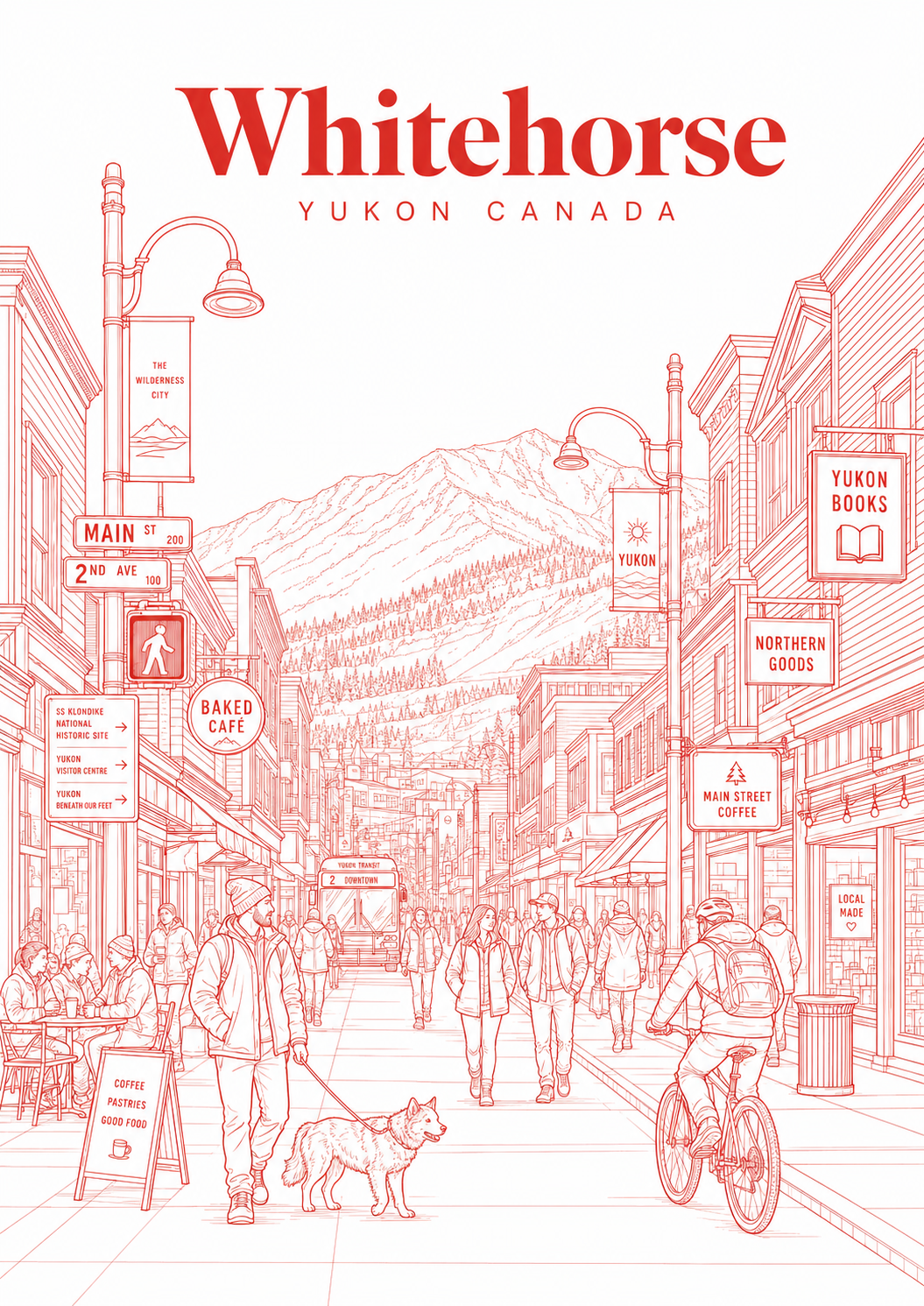 Whitehorse — mountain scenery behind a street with pedestrians, a cyclist and a dog.
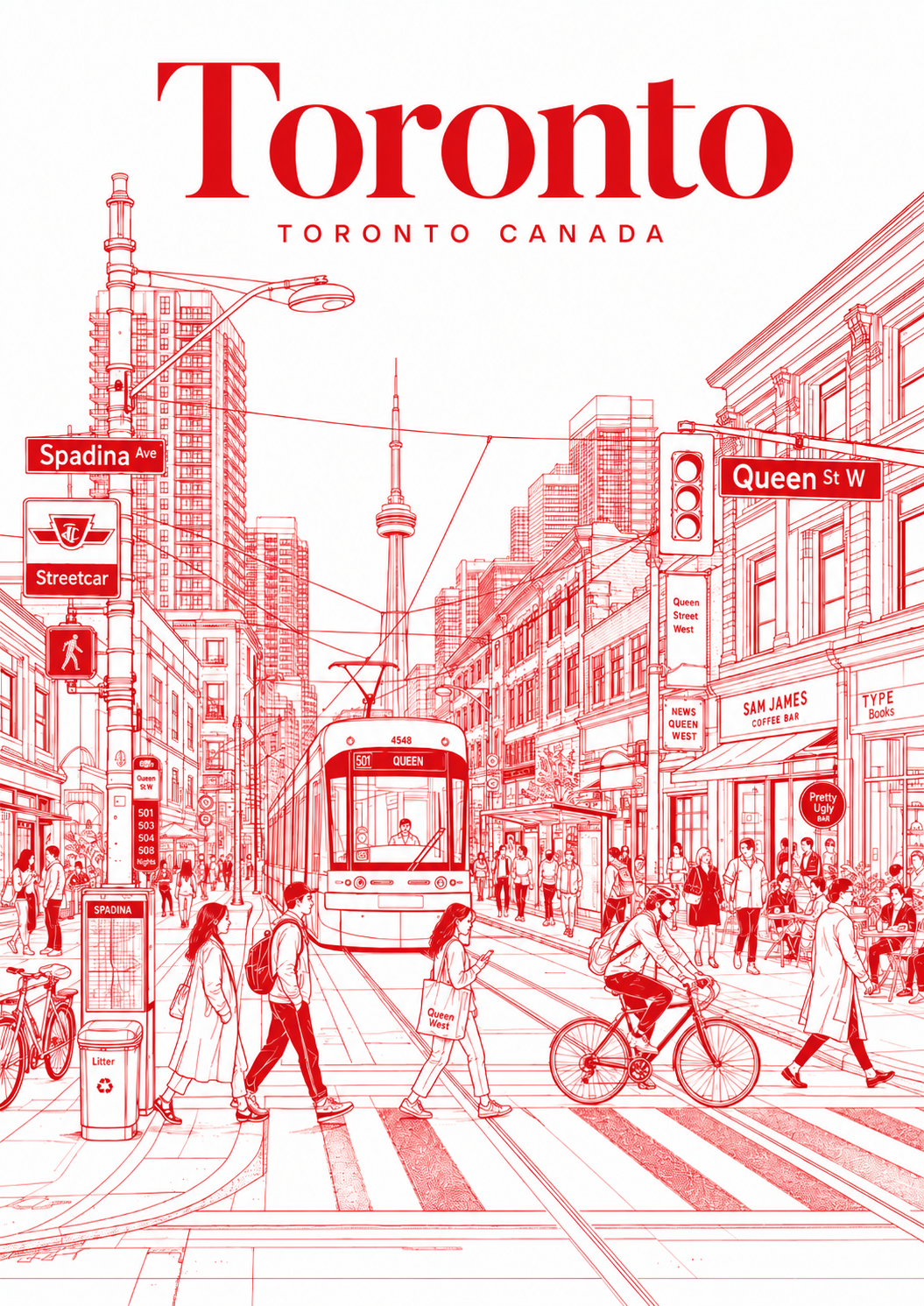 Toronto — a streetcar, cyclists and overhead wires beneath a tower skyline.
A poster is a useful visual constraint
A travel-poster concept gives an image a purpose. It needs to suggest a place, establish a visual hierarchy, and communicate quickly.
The shared layout makes the variations easier to compare. City names, signs, building shapes and background features carry the local identity, while the foreground street scenes establish a common rhythm across the collection.
There is also plenty to inspect closely. Are the signs readable? Do building details remain coherent? Does a recognizable landmark sit in a plausible relationship to the surrounding street? A convincing overall composition can still contain invented or inconsistent details.
Characters raise a different question
A character collection invites comparison across identity, pose, expression, and consistency. If several images are meant to show the same character, the useful question is whether that identity survives the changes.
That is a different evaluation from a series of city posters, where the goal is a recognizable shared style with a different subject in each image.
Preserve the process with the image
The poster collection was retained with a ChatGPT-generated label. The individual prompts, model versions and generation dates are not recorded with the image files, so those details remain open rather than being reconstructed from memory.
For future experiments, I would keep the prompt and revisions beside the selected image. That would make it easier to explain how a visual idea developed and which changes improved the result.